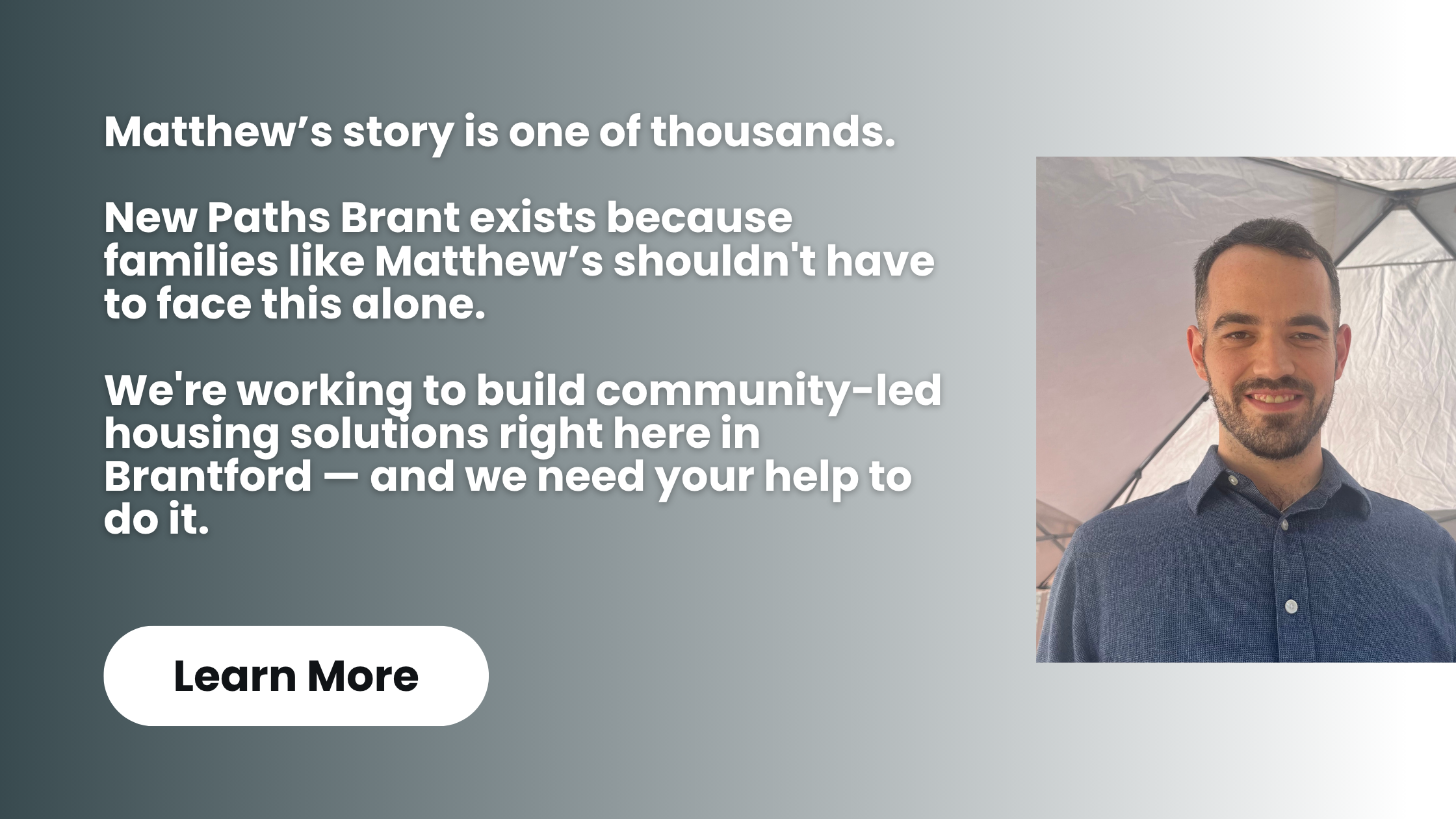
One Crisis Away: Jeff and Patti's Story of Finding Matthew a Home — and the Fear of What Comes Next

Meet Matthew!
Matthew Latty is 32 years old, social, charming, and full of joy. His parents, Jeff and Patti Latty, ages 69 and 65, found him a living situation that's working — for now. But with no permanent plan in place, they worry about what happens when that arrangement, and they, are no longer there.
As told by Jeff and Patti Latty
Parents of Matthew Latty · Brantford, Ontario
Matthew Latty has a gift for making people feel like old friends.
He's the kind of person who will strike up a conversation with anyone — at a dance, a dinner, a movie, a ballgame — and mean every word of it.
At 32, Matthew lives with intellectual and developmental delays and a seizure disorder caused by a metabolic condition called Argininosuccinic Aciduria (ASA), but none of that defines him the way his warmth, humour, and compassion do. For his parents, Jeff and Patti, now 69 and 65, finding Matthew a home of his own two and a half years ago felt like a small miracle. But it's a miracle they had to build themselves — and one they know isn't built to last.
Tell us about Matthew. Who is he?
Our son, Matthew, is 32 with intellectual and developmental delays and a seizure disorder, all caused by a metabolic disorder called Argininosuccinic Aciduria (ASA). He is a very social, happy, friendly, handsome young man who loves to be around people and participate in many social activities like dances, dinners, movies, sporting events, and playing video games.
Matthew has a special charm about him that draws others to him, and he'll chat about anything with anyone who will listen! His joy for life, happy disposition, compassion, and sense of humour make him an incredible human being who we are very proud of. He has helped us, and many others, see life in a different light and appreciate the simple things.
What does your current housing situation look like?
Matthew moved into his own home two and a half years ago and has never looked back. He's part of Community Living Brant's Lifeshare program — we rent the house with another family, and he lives there with his caregiver, her daughter (who also has special needs), and another male roommate. Our caregiver is an absolute angel and such a blessing to all of us. The four of them get along well and have blossomed in this living situation. Matthew has become more independent and has taken on the responsibility of helping the other two young people he lives with, as one is blind and one has Down syndrome. He misses us and his old home, but comes for dinner and overnights regularly, and we talk and text numerous times a day. He also has two support workers who take him out and help him with life skills. All in all, we are over the moon thrilled with his living situation — the only downfall is that we know it isn't permanent.
"All in all, we are over the moon thrilled with his living situation — the only downfall is that we know it is not permanent."
What does a typical day look like, and how does your housing situation affect it?
Matthew has his own bedroom in the lower level of the house and gets himself up every morning, showers, gets his own coffee and breakfast, and makes his lunch. He then either goes to one of his part-time jobs or to Crossing All Bridges Learning Centre, taking Brantford Lift on a regular basis. He can make a few basic things for himself for dinner, but generally his caregiver prepares dinner for all of them, and they all contribute to setting the table, cleaning up, and helping with chores and laundry. The house is in a safe neighbourhood and has a keypad lock that Matthew is able to use. He doesn't venture anywhere without supervision for his own safety, as he is very trusting of anyone and is nervous crossing roads and understanding road safety. He loves to go to dances, social events, movies, and bowling, and either takes Brantford Lift or one of us drives him.
What have you tried when it comes to finding housing?
We researched housing for individuals with special needs in Brantford and could find nothing appropriate for our son. A group of parents formed New Paths Brant to try to come up with viable solutions to this housing shortage. In the meantime, we approached Community Living Brant about the Lifeshare program and came up with the idea of finding our own caregiver and renting our own house. Together, we made the arrangement work. We are also in the process of getting Matthew on the affordable housing waitlist with the City of Brantford.
How would supportive housing improve Matthew's life — and yours?
Finding permanent supportive housing for Matthew would give us peace of mind that he is cared for and in a safe, affordable environment once we are no longer here to care for him and oversee his affairs. If Matthew was in a supportive housing setting, we would love him to be with some of his peers and possibly some caring, responsible community members who could look out for him and somewhat supervise his care. We would love for him to learn more life skills, form relationships with others, and be more included in a community environment — he could help others with certain skills, while they in turn could help him grow. For us, finding supportive housing for Matt would reduce the constant worry we carry about where he will live and who will care for him once we aren't here.
What worries you most about the future?
It is a constant worry for us, and has been for years — what will happen to Matthew when we're no longer here. Although he is quite independent, he is not capable of totally caring for himself, handling his finances, or understanding his healthcare and well-being. Our greatest fear is that something will happen to us before we can secure sustainable care and housing, and he will end up somewhere not suitable for him — a long-term care facility, or with strangers who know nothing about Matthew. We also worry about others taking advantage of him, as he is very trusting and gullible.
"Our greatest fear is that something will happen to us before we can secure sustainable care and housing."
What do you wish more people understood about what families like yours go through?
We would love people to understand that caring and worrying about our loved ones is a 24/7 concern. Most parents look forward to their children growing wings, leaving the nest, and becoming independent adults. That will not happen with our children, and we are responsible for planning their care, finances, healthcare, and housing for the rest of their lives — which could be 50-plus years. This is a huge financial burden for us that most parents of healthy children don't have to plan for. We just want our children to be accepted as contributing members of our community who deserve safe, sustainable housing in a loving, accepting community, just like everyone else. They have so much to offer society, are so loving and accepting, and yet are very vulnerable and in need of care and services that aren't always available.
Is there anything else people need to hear?
Housing for individuals with intellectual and developmental disabilities doesn't seem to be on the radar of municipal, provincial, or federal governments. We constantly hear about homeless seniors, individuals with mental health challenges, and those struggling with addiction — but very seldom do you hear about the lack of housing for our loved ones. This needs to change, and we need to be heard. Our children are not able to earn a living or fend for themselves, so unfortunately they need much more support than most individuals. They are capable of so much more than a lot of people give them credit for — including us, their parents — and they deserve to be recognized. We are the first generation of parents not institutionalizing our loved ones, and there is relatively little visibility and support for what that takes.
"Our children are one crisis away from homelessness."