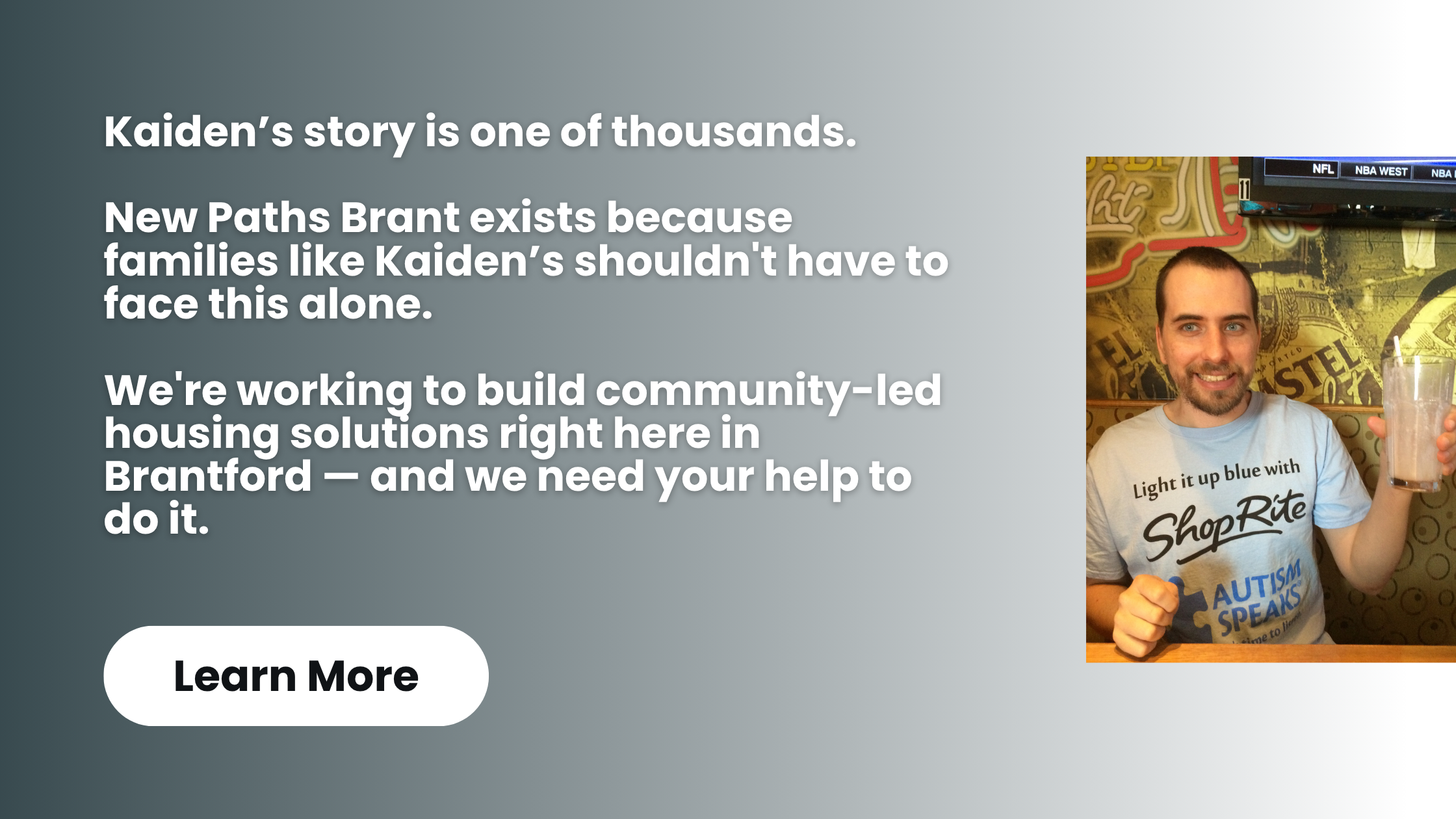
It Takes a Community: Christine's Story of Caring for Kaiden — and the Activities He Loves Most

Meet Kaiden!
Kaiden Weaver is 39 years old, full of energy, humour, and a love of being out in the world. His parents, Christine and Carl Weaver, ages 70 and 77, have built a life around making sure he can keep doing the things he loves. But as they look toward the future, they worry about what happens to those activities — and to Kaiden — when they're no longer able to provide that support.
As told by Christine Weaver
Mother of Kaiden Weaver · Brantford, Ontario
Kaiden Weaver doesn't like sitting still, and he definitely doesn't like spending too much time with his family. At 39, he's out the door every chance he gets — to day programs, Special Olympics, bowling, dances, movies, anything with music and people and a bit of fun. He's the kind of person who appreciates a good laugh, silly or otherwise, and who lights up the moment he's somewhere new. For his parents, Christine and Carl, now 70 and 77, keeping that life going for Kaiden has meant years of driving, scheduling, and showing up. But they're starting to ask the question every aging caregiver eventually has to ask: what happens to all of this when we can't do it anymore?
Tell us about Kaiden. Who is he?
Kaiden loves to be out and about seeing people at daily activities. He loves being places with music, such as dances. Other favourite activities include bowling, Special Olympics, and any activity that gets him away from his family — he gets tired of spending too much time with us! He's incredible because he enjoys fun and humour. Silly is okay, but he really appreciates laughter and making others laugh.
What does your current housing situation look like?
Currently, Kaiden lives in a house owned by his parents, along with us and his brother — who have different interests and are at different stages of life. He appears to be bored being at home and would rather be doing anything away from it. He can't be left alone at home, so this adds constraints on the rest of the family's activities. Many of his activities also require that we provide transportation.
"He appears to be bored being at home and would rather be doing anything away from it."
What does a typical day look like, and how does your housing situation affect it?
Monday to Friday, Kaiden goes to day programs from 9 a.m. to 3 p.m. In the evenings, two to three times a week, he has Special Olympics for two hours, which requires transportation either from a parent or the Brantford Lift service. On weekends or evenings, Kaiden goes shopping, to movies, dances, or concerts with his mother or a respite worker — services paid for through Passport funding. When Kaiden was younger, he tried supported job programs, but in every case he was let go for being too disruptive. In one example, a group of individuals were cleaning cable TV controllers — Kaiden put his whole effort into talking up the girls, so nothing got done. Right now, living at his parents' home, housing isn't a big problem. But when his parents pass — and the Passport funding ends — most of the activities Kaiden loves will be lost.
How would supportive housing improve Kaiden's life — and yours?
Kaiden can't drive a car. He doesn't understand that people have to work to get money to buy food and shelter. If he was in a work environment, he would be disruptive. If he had money, he would be an easy mark for thieves. His personal hygiene is problematic. If he bought his own food, it would be Coca-Cola, ice cream, and cake. If he used a stove, it would be a fire hazard. Supportive housing could alleviate all of these problems.
What worries you most about the future?
It takes a community to raise a child.
What do you wish more people understood about what families like yours go through?
Many social activities that are taken for granted will not be possible.