Ten Years on a Waitlist (& Counting!): Neil's Story and the Housing Crisis Facing Families Like His

Meet Neil!
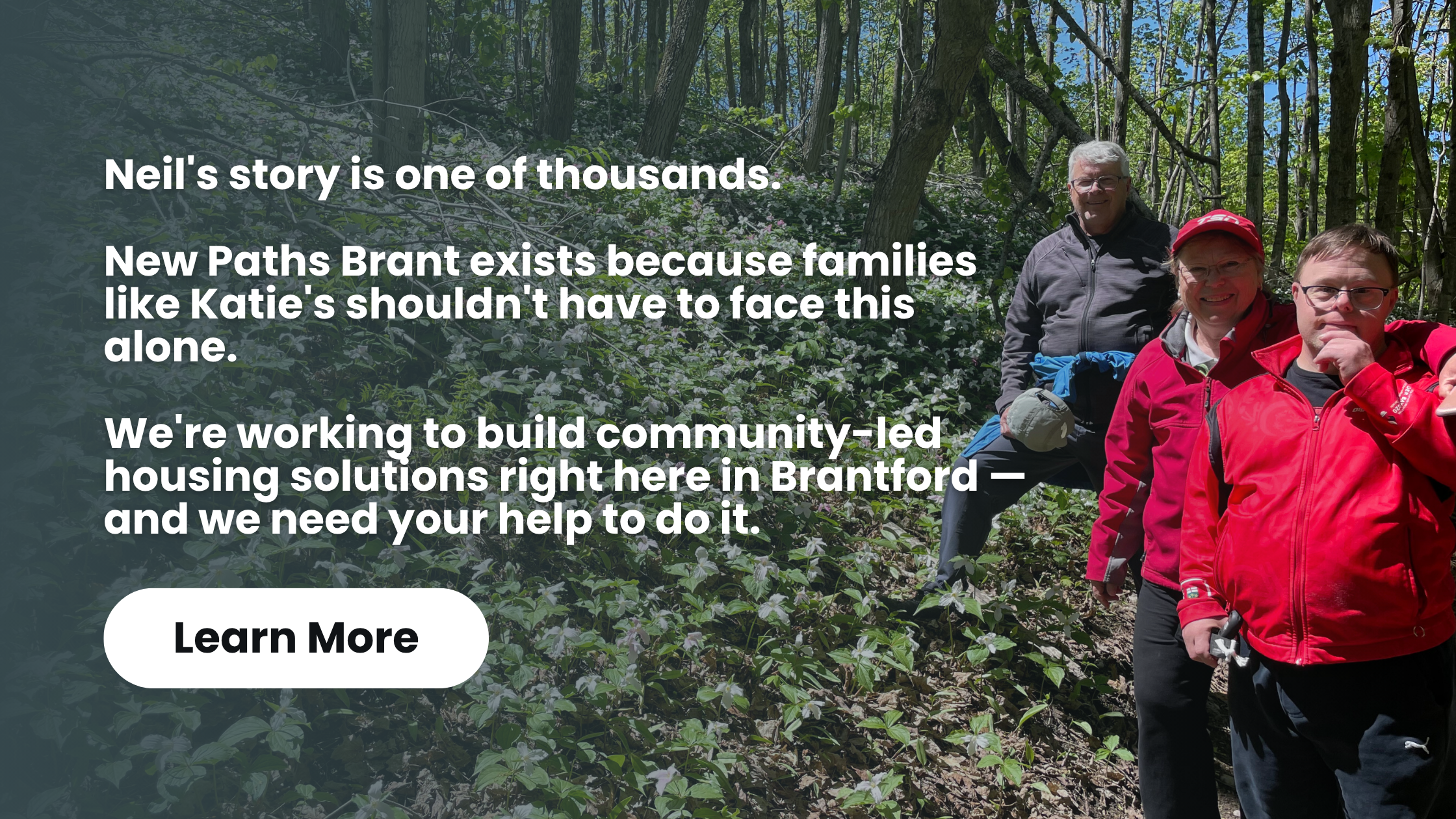
Neil MacDonald is a world traveller, a baseball player, a potter, and a people person. He also has a developmental disability — and for more than a decade, his family has been waiting for the one thing that could change all of their futures: a place of his own.
As told by Katie MacDonald
Sister of Neil MacDonald · Brantford, Ontario
Neil MacDonald has been to Hawaii, Scotland, and Abu Dhabi. He shows up for his community through work, volunteering, and sport. He paints, he curls, he makes pottery with his hands. At 43 years old, Neil is, by any measure, a man with a full and vibrant life — and yet the single biggest piece of that life, a home of his own, remains out of reach. His sister Katie, 41, has spent the last decade helping her parents and her brother navigate a system that wasn't built to keep up with families like theirs. This is their story.
Tell us about Neil. Who is he?
Neil is a social butterfly who loves spending time with family and friends. He's deeply engaged in his community through both work and volunteering, and he's a driven athlete who plays baseball and curling and competes in the Special Olympics. Beyond sport, Neil is a talented artist who works in painting, woodworking, and pottery. He's also an avid traveller who has explored Hawaii, Scotland, and Abu Dhabi — and he always comes back with stories about the people he's met and the adventures he's had along the way.
What does your family's current housing situation look like?
Neil lives at home with our parents, who are both turning 75 this year. Over the last few years, he's started spending one to two nights a week at my house to give everyone a bit of breathing room. All three of them — Neil and my parents — are needing more support now as they age. Living together full-time doesn't allow for the independence and time apart that they each need to stay healthy and well.
"Without us, he'd be homeless, without a job, and in very poor health — mental, physical, social."
What does a typical day look like, and how does your housing situation affect it?
Neil and my parents eat most meals together. My parents drive him to all of his work and community activities — spending hours each day behind the wheel because they live in a large home in the country, where there's no transit access and nowhere to walk to. Every day Neil has one or two activities: sports, hobbies, or work. All of it is organized by us, his family. Without that coordination, his opportunities would be very limited. It takes an incredible amount of time and energy to plan and manage everything needed for him to have a rich, connected life in the community.
What have you tried when it comes to finding housing?
We've been on waitlists for supported independent living and group living for over ten years. The only change we've been able to make in that time is having Neil come stay with me on a weekly basis — something we started during my mom's health crisis and kept up because it gives everyone a small break from each other. That arrangement puts real pressure on me to stay in Brantford and structure my schedule around being consistently available to help.
10+ years
The MacDonald family has been on waitlists for supported independent living and group living — with no end in sight. The current supported living waitlist in Ontario is estimated to be20 years long. For most people with developmental disabilities, that means they will never access these supports in their lifetime.
How would supportive housing improve Neil's life — and your family's?
Supportive housing would give Neil the chance to grow his independence and feel more integrated into the community. I believe he would be proud to have his own apartment or home — that sense of agency in his own life is something he deserves. For my parents, it would give them the space to finally focus on their own health and plan for their own aging future. Right now, they can't prioritize those things because they're wholly focused on helping Neil navigate day-to-day life. Their mental and physical health has suffered as a result.
What worries you most about the future?
I'm worried that supported housing will simply never come. That my parents will have to continue caring for Neil well into their own aging years — which isn't safe or healthy for any of them. And I worry that without a plan in place, I'll end up stepping into a crisis situation: trying to provide housing for my brother while working full time and supporting my parents simultaneously. Right now, Neil's entire future depends on us. Without his family, he would have no home, no job, and no support network. That's an incredibly fragile place for a person to be.
What do you wish more people understood about what families like yours go through?
People often assume that people with disabilities are taken care of by the government. They're not. Developmental service agencies and government programs are almost entirely dependent on families stepping in to provide housing and ongoing support — often for the duration of their entire lives. Even when initiatives exist to address community housing and homelessness, people with developmental disabilities are frequently excluded because they don't have access to the supports that would allow them to live independently in those spaces.
The problem is layered: there aren't enough affordable homes, there aren't enough support workers, and there aren't enough funded spaces on waitlists that move. Seventy-five percent of people with disabilities live below the poverty line. They keep falling through the cracks — either they don't qualify, the supports aren't available, or they wait on lists for decades. It's a system that was never designed to keep up with the people who need it most.
"People assume the government takes care of people with disabilities. But families are the system."
Is there anything else people need to hear?
We need community-led, community-supported solutions — because waiting for the government to provide them isn't working. We need creative, innovative partnerships that build housing options designed by the community, for the community. That approach also helps ensure long-term sustainability. And more than anything, it would give families a small, hard-won piece of peace of mind: knowing that if they're no longer able to provide care, their loved one will still have a home — and people around them who care.